
All the world’s a stage, yet what happens when there is no more ‘backstage’? On the surveillance state and having nowhere to hide (from creditors, taxmen, states and corporations), and conversely, on the benefits of transparency. Do we really want to live in for-profit private city-states? Does your government really need to know who you … Continue reading In defence of Imperfect information
Tag: observations
A trending idea that’s caught my attention
Monkey Bars
I’m very interested at the moment in what is happening with the various social contracts that hold our civilisation together; those explicit and implicit agreements that govern what society is and how it functions. This topic of “social contracts” covers everything from the agreement states have with their citizens to provide services and protection for … Continue reading Monkey Bars
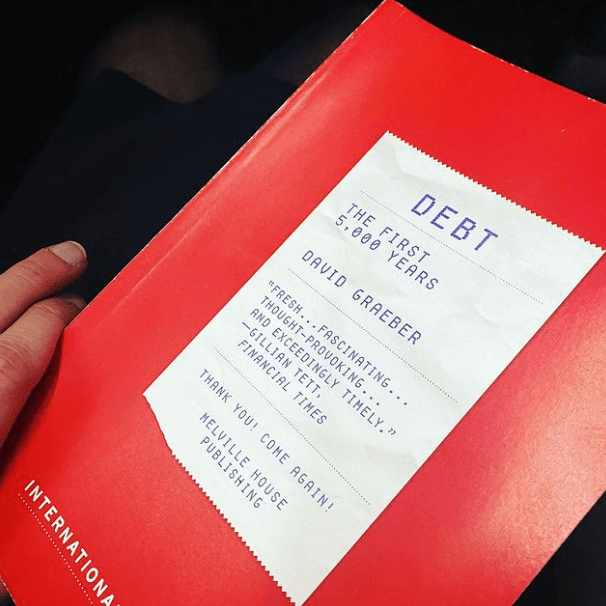
Debt and Taxes
Ah, I've been thinking a lot about the late David Graeber lately. He was right about diagnosing so many problems (and quite wrong about many of his proposed solutions). Debt, The First 500 Years, has become one of my favourite economics books. I keep coming back to it and how it makes explicit the dirty … Continue reading Debt and Taxes
Ritual without relationship
I've been thinking lately about secular religion (again) and our general metaphysical turn. Yes, post plague and pandemic, in the apocalyptic age of uncertainly, where the gods of war, famine and flood run amok and technology we do not understand begins to look a lot like magick, it's not surprising there is a dramatic shift … Continue reading Ritual without relationship
Built not to last
“the thing was that good boots lasted for years and years. A man who could afford fifty dollars had a pair of boots that'd still be keeping his feet dry in ten years' time, while the poor man who could only afford cheap boots would have spent a hundred dollars on boots in the same … Continue reading Built not to last
The great divide -and the Disappearing Co-Dependant Class
This essay was first published in the book, Aftershocks and Opportunites. It was written in 2020. I think it aged fairly well. Is COVID-19 a great equalizer or a great divider? COVID-19 is by no means an equalizing crisis. Indeed, one of the most significant lasting socio-economic effects of the crisis will be the opening … Continue reading The great divide -and the Disappearing Co-Dependant Class
Look, don’t touch
When cathedrals and manor houses become museums and billboards, open to "the public" (for a fee), but closed to being an integral part of our individual, personal lives their beauty becomes ugly, garish, and unnecessary. They no longer belong to us. They are just objects to be looked at, not spaces to play and pray … Continue reading Look, don’t touch
On minimalism Vs Utilitarianism
There is a difference between minimalism and utilitarianism. The difference is between removing everything that is unnecessary and stoping before you have removed too much. That one proverbial straw that broke the camel's back - or the one removed detail that turned elegance into homogenous banality. The distinction between functional form and the function without … Continue reading On minimalism Vs Utilitarianism
The herasy of pricing that which is invaluable
Let’s talk about capitalism. Everyone has an opinion on it. Definitions, of course, vary according to personal agendas; its merits (or lack thereof) are even more hotly contented depending on what quadrant of the Nolan political compass the subject leans towards. Today, however, I want to focus on the future of capitalism, specifically the near … Continue reading The herasy of pricing that which is invaluable
Of Markets, Money and Monopolies
Sometimes a picture gets the point across quicker. Money is a necessary evil for allocating real scarcity - therefore it needs to be definitively scarce itself. Markets make more (good for maximising and allocating goods, bad). Monopolies make less (good for limiting bads; evil for limiting goods). Artificial abundance has unintended consequences (artificial goods can … Continue reading Of Markets, Money and Monopolies